If you’re researching property taxes in Colchester, CT, you’ve probably heard the same thing over and over:
“Colchester has lower taxes.”
That statement is often true — but it’s also incomplete.
To understand the real cost of living in Colchester, you need to look beyond headlines and understand how Connecticut property taxes actually work, and how Colchester compares to nearby towns once all factors are considered.
 Prefer video? Watch the full breakdown here:
 Property Taxes in Colchester vs Surrounding Towns (Why They’re Often Lower)
Why Colchester Is Known as a “Lower-Tax” Town
Colchester is a larger town with:
A bigger grand list
A mix of residential, commercial, and light industrial properties
A wide range of housing types and price points
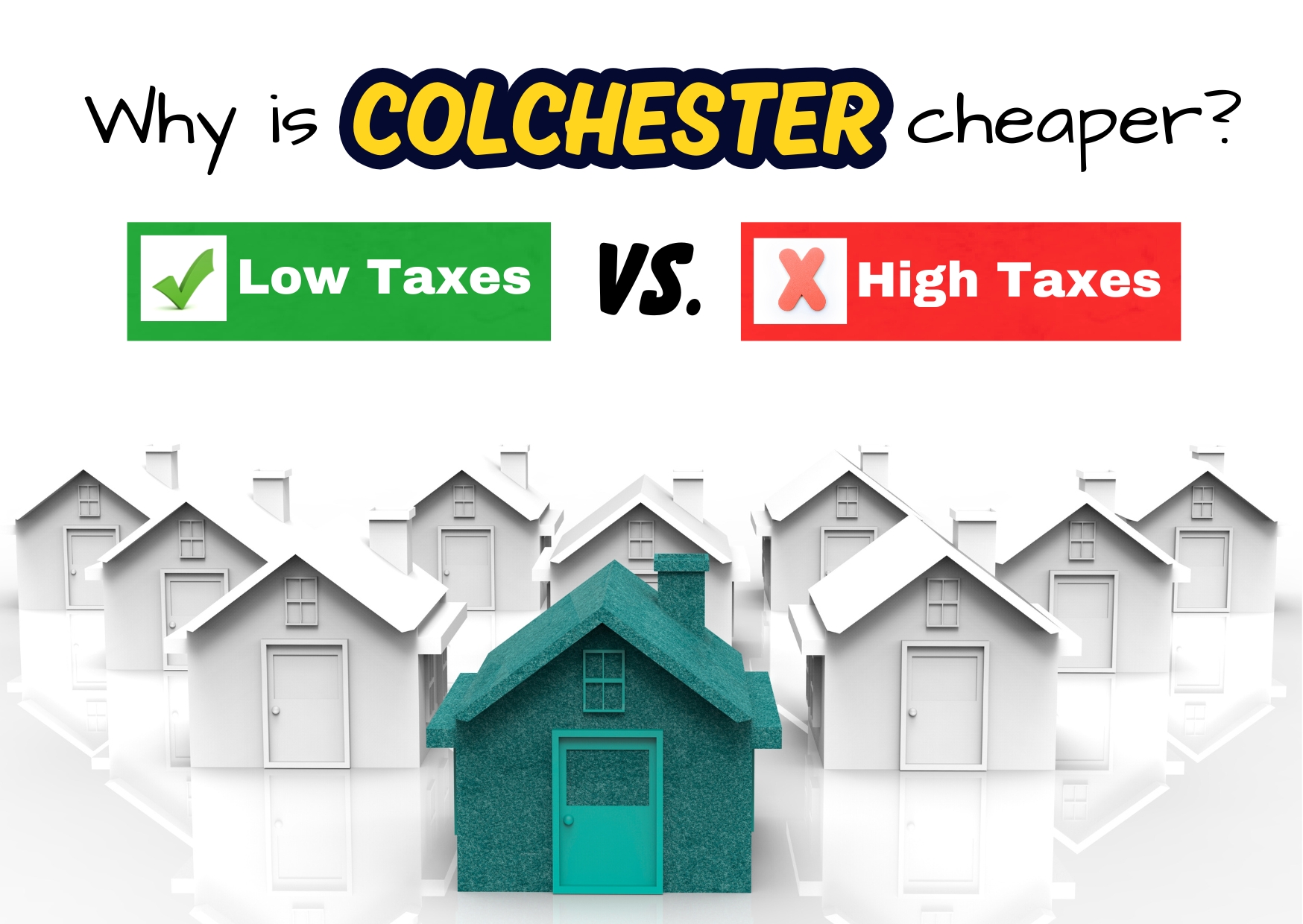
That structure allows the tax burden to be spread across more properties, which is one of the main reasons Colchester often comes out lower in tax comparisons.
But that’s only part of the story.
Property Taxes 101: Mill Rate Is Only Half the Equation
Most online comparisons stop at mill rate. That’s where people go wrong.
Property taxes in Connecticut are calculated using two variables:
Mill rate
Assessed value
Looking at one without the other leads to misleading conclusions.
Mill Rates: What Buyers Usually See First
Here are the approximate mill rates buyers often compare:
Colchester: ~29.92 mills
Marlborough: ~37.52 mills
Hebron: ~34.50 mills
Glastonbury: ~31.93 mills
At face value, this makes Colchester look like the clear winner.
In many cases, it is — but not just because of the mill rate.
Assessed Values: Why Colchester Usually Comes Out Lower
Connecticut does not tax homes based on purchase price. Taxes are based on assessed value, which varies significantly by town.
Colchester typically benefits from:
Lower average home values than Glastonbury
Greater housing variety (not all high-end homes)
Less extreme assessment jumps during revaluations
When you combine a lower mill rate with lower average assessed values, Colchester often produces meaningfully lower tax bills.
The Real-World Property Tax Comparison
When you factor in mill rate and assessed values, the typical overall tax burden in this region often ranks like this:
Glastonbury – highest overall property taxes
Marlborough
Hebron
Colchester – lowest overall taxes in most cases
This surprises buyers who assume a lower mill rate always equals lower taxes — especially when comparing Colchester to Glastonbury.
When Colchester Is Not the Cheaper Option
This is where nuance matters.
Colchester can lose its tax advantage when you’re looking at:
New construction
Larger homes on acreage
Lake-adjacent or premium locations
Neighborhoods with higher assessed comparables
In those cases, property-specific details matter more than town averages.
How Colchester Compares to East Hampton and Tolland
Buyers often cross-shop Colchester with nearby towns like East Hampton and Tolland.
In general:
East Hampton tax bills can vary widely depending on lake proximity and assessed values. Averages can be misleading.
Tolland has a larger grand list and more stable assessments, often leading to more predictable tax bills — especially in newer developments.
Again, this reinforces the same point: averages don’t tell the whole story.
What This Means for Buyers Considering Colchester
Colchester Often Makes Sense If:
You’re budget-conscious on monthly costs
You want more house for your money
You value predictability in taxes
You’re comparing multiple rural or semi-rural towns
Colchester May Not Be Ideal If:
You’re buying high-end or new construction
You assume all Colchester homes are low-tax
You’re ignoring assessed values after revaluation
Final Thoughts: The Right Way to Compare Property Taxes
The biggest mistake buyers make is asking:
“Which town has the lowest mill rate?”
The better question is:
“What will this specific property actually cost me to own long-term?”
That’s the difference between smart planning and unpleasant surprises.
Watch the full video breakdown here: Property Taxes in Colchester vs Surrounding Towns (Why They’re Often Lower)
If you’re comparing Colchester to Marlborough, Hebron, Glastonbury, East Hampton, or Tolland and want help walking through real numbers for your situation, that kind of planning is exactly what I help buyers with.
Frequently Asked Questions About Property Taxes in Colchester, CT
Are property taxes lower in Colchester, Connecticut?
In most cases, yes. Colchester typically has lower overall property taxes because it combines a lower mill rate with lower average assessed home values.
Is Colchester cheaper than Marlborough for property taxes?
Generally, yes. Marlborough tends to have a higher overall tax burden once assessed values are factored in.
Can Colchester property taxes still be high?
Yes. New construction, lake-adjacent homes, or larger properties can significantly increase tax bills.
Why is mill rate not enough to compare property taxes?
Because property taxes are calculated using both mill rate and assessed value. Ignoring either one leads to inaccurate comparisons.
How does Colchester compare to East Hampton and Tolland?
Both towns vary widely by property. East Hampton can swing dramatically based on lake proximity, while Tolland often has more predictable taxes due to a larger grand list.
Check out this article next