
By Jason Boice, REALTOR®, eXp Realty — Published on September 10, 2026
One of the questions I hear from homeowners with an older or dated property is:
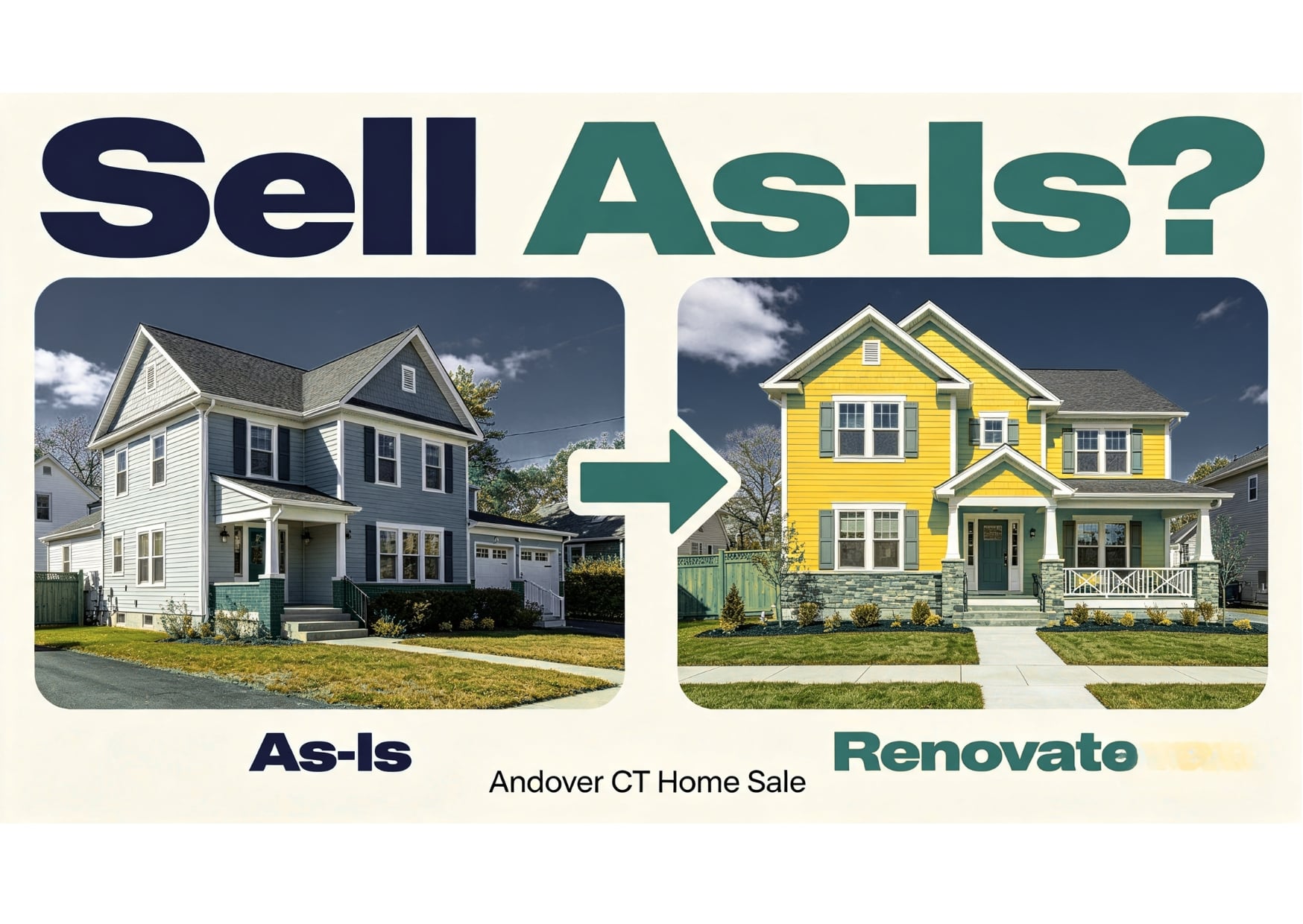
Should we renovate the house before we sell it, or just sell it as-is?
There's a good reason sellers struggle with this decision.
Condition is one of the major drivers of value. Buyers are generally willing to pay more for a house that's updated, clean, and completely move-in ready.
So renovating should make sense, right?
Not necessarily.
The important question isn't:
Will renovating make my Andover home worth more?
It probably will.
The better question is:
Will renovating make the house worth enough more to justify the money, time, inconvenience, and risk of doing the renovation?
Very often, my answer is no.
That doesn't mean I recommend doing nothing. There's an important difference between selling a house as-is, preparing a house properly for the market, and renovating a house before selling it.
Understanding that difference can potentially save a seller a lot of unnecessary work and expense.
TL;DR: Should You Renovate Before Selling in Andover?
For most sellers, I would not automatically recommend major renovations before listing.
Instead, I generally focus on three categories:
1. Fix actual problems
Water intrusion, mold, structural problems, leaks, safety concerns, or other significant defects may be worth addressing before buyers discover them.
2. Make relatively inexpensive improvements with good potential ROI
Depending on the house, that can include:
Cleaning
Decluttering
Fresh paint
Flooring
Landscaping
Removing dated wallpaper
Cosmetic repairs
Selective kitchen improvements
Granite countertops in the right situation
3. Think very carefully before undertaking major renovations
A completely new kitchen or bathroom may increase your home's sale price.
But if you spend $50,000 renovating and buyers only pay $30,000 more for the house, you've done a lot of work to end up with less money.
The goal isn't to get the highest possible sale price. It's to maximize what you walk away with.
Condition Absolutely Matters When Selling a Home in Andover
I don't want sellers to misunderstand the argument against renovating.
Condition matters—a lot.
It's one of the major factors I consider when determining what a house is worth.
Buyers are willing to pay a premium for a house where they can move in, unpack, and start living.
An updated kitchen photographs better.
Newer flooring improves the feel of the house.
Fresh paint makes rooms feel cleaner and brighter.
Updated bathrooms can make an older home feel considerably newer.
A well-maintained exterior makes buyers more confident about the rest of the property.
So yes, an updated home will generally be worth more than an otherwise comparable dated home.
But that still doesn't answer the question sellers actually need answered.
Who should pay for those improvements—the seller or the next owner?
That's where the calculation changes.
A Renovation Can Increase Value and Still Be a Bad Investment
Imagine your Andover home could sell for $400,000 today.
You believe renovating the kitchen would make the property more attractive, so you spend $40,000 updating it.
After the renovation, perhaps the house sells for $425,000.
You sold for $25,000 more.
But you spent $40,000 to get there.
You increased the sale price while decreasing your net proceeds by $15,000.
That's an oversimplified example, but it demonstrates why I don't evaluate renovations solely by whether they'll make a house more valuable.
Of course they can make it more valuable.
The question is whether they create more value than they cost.
And with major renovations immediately before selling, that can be difficult.
There Are Really Three Choices—not Two
Sellers often frame this decision as:
Renovate
or
Sell as-is.
I think there's a very important third option.
Option 1: Sell Completely As-Is
Do very little and price the property based on its current condition.
This can make sense when speed and convenience are the seller's priorities, particularly with inherited properties or homes requiring substantial work.
Option 2: Prepare the Existing House Properly
This is frequently my preferred approach.
We're not trying to transform the house.
We're making the existing house look as good as reasonably possible.
That might mean cleaning, decluttering, landscaping, painting, making repairs, improving flooring, and taking care of inexpensive items that negatively affect buyer perception.
Then we professionally present and market it.
Option 3: Renovate
This means making substantial improvements before selling—perhaps a new kitchen, bathrooms, significant flooring replacement, or a larger remodel.
There are situations where this makes sense.
But I wouldn't choose Option 3 until we've run the numbers.
Real Andover Example: Selling a Dated Home Without Renovating It
A good example of this was 80 Hebron Road in Andover.
The family contacted me after their parents passed away and they inherited the property.
They lived out of state.
The house was dated, but importantly, it was in good condition.
The family didn't want to spend months managing contractors and renovating a Connecticut property from out of state.
And I didn't think we needed to transform the house to successfully sell it.
Instead, we developed a plan around the property we already had.
We Started With the Clean-Out
With an inherited home, the first challenge is often simply dealing with everything that's accumulated in the house.
We developed a plan to get the property cleaned out and ready to present to buyers.
But we didn't turn that process into an unnecessary remodeling project.
The house was dated.
We allowed it to be dated.
Then we focused on presenting it properly.
We Used Professional Marketing
Once it was ready, our marketing included:
Professional photography
Floor plans
Professional video
Strategic positioning
Strategic pricing
We listed 80 Hebron Road at $349,000.
The Result
List Price: $349,000
Sale Price: $383,000
$34,000 Over Asking
The family was able to sell the inherited property without first becoming long-distance renovation project managers.
That's an important point.
I can't say that renovating the house wouldn't have produced a higher sale price.
It probably could have.
But that's not the only consideration.
They would have needed to invest money upfront, coordinate contractors from out of state, assume the risks of the renovation, wait for the work to be completed, and then hope the increased sale price justified everything they spent.
Instead, we developed a strategy around the house in its existing condition.
And the market responded.
Selling As-Is Doesn't Have to Mean Doing Nothing
This is one of the biggest misconceptions sellers have.
When I tell someone I don't think they should renovate, I'm not necessarily saying:
Don't touch anything. Put a sign in the yard tomorrow.
There's a huge difference between renovating and preparing.
For example, I may recommend:
Deep cleaning
Decluttering
Removing excess furniture
Cleaning up landscaping
Fresh paint
Removing wallpaper
Replacing badly worn flooring
Fixing broken fixtures
Correcting obvious cosmetic defects
Making inexpensive updates
Addressing known maintenance issues
These projects can improve the way buyers perceive the house without turning the seller into a general contractor.
Some of the Best Improvements Are Relatively Inexpensive
The improvements with the best potential return aren't always the most dramatic ones.
Paint
Fresh, neutral paint can completely change how a room photographs and feels without the expense of remodeling it.
Cleaning
A dated but immaculate house can still make a very positive impression.
A renovated house that's dirty can make buyers wonder how well everything else has been maintained.
Decluttering
Less furniture and fewer belongings can make rooms feel larger and allow buyers to focus on the house.
Landscaping
You don't necessarily need an elaborate landscaping project.
Sometimes trimming bushes, pulling weeds, mulching, removing debris, and cleaning up the entrance is enough to dramatically improve the first impression.
Flooring
Badly worn or damaged flooring can negatively affect an otherwise attractive house. Depending on the situation, replacement or refinishing may be worth considering.
Granite Countertops
Granite can be one of the better-return improvements in the right kitchen.
If the cabinets are still attractive and functional but the countertops are making the kitchen feel significantly dated, changing the counters can sometimes update the entire room without paying for a complete kitchen remodel.
The key is selective improvement.
We're looking for places where a relatively reasonable investment can create a disproportionately better buyer impression.
Dated Is Different From Defective
This distinction is extremely important.
A 1990s kitchen can be dated but completely functional.
An older bathroom can be dated but clean and perfectly usable.
Older hardwood floors can show wear without needing immediate replacement.
Those are condition and cosmetic considerations.
Compare that with:
Active water intrusion
Attic mold
A leaking roof
Structural concerns
Major chimney problems
Plumbing leaks
Unsafe electrical issues
Failed mechanical components
Those aren't simply matters of taste.
They're defects.
And if I reasonably expect a buyer to notice an issue during a showing or an inspector to identify it later, I'm much more likely to discuss addressing it before we list.
Why Fix a Problem if You're Selling Anyway?
Because unresolved defects can affect buyers by more than their actual repair cost.
Suppose there's evidence of water intrusion.
The seller may know exactly what caused it and believe it's a relatively straightforward repair.
The buyer doesn't know that.
The buyer sees water and starts imagining:
Roof replacement.
Mold.
Rot.
Structural damage.
Thousands—or tens of thousands—of dollars.
Uncertainty makes buyers cautious.
That's why correcting a $2,000 problem can sometimes be more useful than spending $20,000 making a functional kitchen prettier.
One removes fear.
The other improves aesthetics.
Buyers Pay More for Move-In-Ready Homes
There's another reason updated homes command a premium.
Renovating is inconvenient.
A buyer may know that a kitchen could be remodeled for a certain amount of money, but that doesn't mean they want to do it.
They may have to:
Find contractors.
Choose materials.
Coordinate schedules.
Live through construction.
Deal with unexpected expenses.
And pay for the work after they've already spent substantial money purchasing the house.
For some buyers, paying more for a house that's already finished is worth it.
That creates an opportunity for sellers of updated homes.
But again:
Buyers paying a premium for renovated homes doesn't automatically mean every seller should renovate before selling.
When Might a Larger Renovation Make Sense?
There are situations where I'd at least consider it.
For example, if one specific part of the house is substantially holding the property back and the renovation cost is relatively low compared with the expected increase in value, it deserves analysis.
It may also make sense when a seller already planned to complete the work, has reliable contractors, isn't under time pressure, and can comfortably finance the project.
But before making that decision, I'd want to answer:
What is the house likely worth today?
What would it likely be worth after the renovation?
What will the renovation realistically cost?
How long will it take?
What could go wrong?
What additional carrying costs will we incur while completing it?
That's how I would make the decision.
Not:
"Updated houses sell for more, so let's renovate."
Don't Forget the Cost of Time
Renovation cost isn't only the contractor's invoice.
If a project delays your sale by three months, you may have another three months of:
Mortgage payments
Property taxes
Insurance
Utilities
Lawn maintenance
Snow removal
Interest
General upkeep
For an inherited property, those expenses can be especially frustrating because the family may be maintaining a vacant house they don't intend to keep.
There is also the value of the seller's time.
Managing estimates, contractors, materials, schedules, and unexpected problems has a cost—even if it doesn't appear on the closing statement.
That's particularly relevant for an out-of-state seller like the family at 80 Hebron Road.
What If You've Inherited a House in Andover?
Inherited properties are one of the situations where this conversation comes up frequently.
Maybe your parents lived in the house for decades.
It's well maintained, but the kitchen is dated.
There are belongings everywhere.
Some rooms haven't been painted in years.
You live two states away.
It's tempting to assume:
We need to update this before anyone will want it.
You may not.
Sometimes the better plan is:
Clean it out.
Address actual defects.
Clean and prepare it.
Price it correctly.
Market it professionally.
Let the buyers decide what they want to change.
That's essentially what we did at 80 Hebron Road.
How Should You Price a Dated Andover Home?
You can't price a dated house as though it's fully renovated.
That's where sellers sometimes get themselves into trouble.
They decide not to renovate—which can be completely reasonable—but then want the same price as the beautifully renovated house down the street.
The market usually won't give you both.
When I'm determining value, condition is one of the adjustments I make when comparing the property with recent sales.
Then we need to decide how to position the house.
Sometimes pricing aggressively can attract buyers who see the opportunity, create competition, and allow the market to determine how much they're willing to pay.
That's part of what made the strategy at 80 Hebron Road successful.
Should You Renovate or Sell As-Is in Andover?
For most sellers, my starting point would be:
Don't renovate until we've figured out whether the numbers actually justify it.
If the house is dated but otherwise in good condition, selling without major renovations can be an excellent option.
If there are actual defects, we should evaluate whether correcting those issues will improve buyer confidence and reduce inspection risk.
And if there are inexpensive improvements that dramatically improve presentation, those may be worth doing.
The goal isn't to choose between doing everything and doing nothing.
Usually, the best answer is somewhere in between.
My General Andover Pre-Sale Strategy
Before a seller spends significant money, I'd rather walk through the property and divide everything into three categories:
FIX
Problems that could materially hurt buyer confidence or become significant inspection issues.
PREPARE
Cleaning, decluttering, landscaping, paint, flooring, and selective cosmetic improvements that may improve presentation without excessive expense.
LEAVE ALONE
Dated but functional components where the seller is unlikely to recover enough of the renovation cost to justify doing the work.
That creates a much more strategic preparation plan.
We're not asking what could be improved.
We're asking:
What should we spend money on to maximize the seller's eventual net result?
That's the question that matters.
Thinking About Selling an Andover Home?
If you're considering selling in the next several months and you're wondering whether to renovate first, I'd recommend making that decision before hiring contractors or ordering materials.
I can walk through the property with you, look at the condition, compare it with recent Andover sales, and help determine which projects I'd prioritize—and which ones I wouldn't spend money on.
That might mean renovating something.
It might mean making a handful of targeted improvements.
Or, as with 80 Hebron Road, the better strategy may be to clean out the house, prepare it properly, price it strategically, market it professionally, and sell it in its current condition.
The goal isn't necessarily the highest sale price.
The goal is the best overall outcome after accounting for your money, time, risk, and priorities.
Call or text Jason Boice at 860-452-3153 for a no-pressure consultation.
FREQUENTLY ASKED QUESTIONS
Is it better to renovate or sell a house as-is in Andover, CT?
It depends on the property's condition, renovation costs, expected post-renovation value, timing, and the seller's priorities. Major renovations often aren't worthwhile immediately before selling. Targeted repairs and lower-cost preparation can frequently make more sense.
Do updated homes sell for more in Andover?
Condition is a major driver of value, and buyers are generally willing to pay more for updated, move-in-ready homes. However, a higher sale price doesn't necessarily mean the seller will recover everything spent on renovations.
Should I renovate a dated kitchen before selling?
Not automatically. If the kitchen is functional but dated, a complete remodel may cost more than the additional value it creates. Selective improvements such as paint, hardware, or granite countertops may sometimes provide a better return.
What renovations have the best ROI before selling?
Lower-cost improvements often provide some of the strongest potential returns. Depending on the property, these can include paint, flooring, landscaping, cleaning, decluttering, removing dated wallpaper, correcting cosmetic defects, and selective kitchen improvements such as granite countertops.
Should I repair problems before selling my Andover home?
Actual defects deserve more attention than cosmetic age. Water intrusion, mold, structural concerns, leaks, chimney issues, safety problems, and other likely inspection concerns may be worth correcting before listing.
Can I sell an inherited house in Andover without renovating it?
Yes. An inherited home does not necessarily need to be renovated before it can be sold successfully. At 80 Hebron Road in Andover, an out-of-state family inherited a dated but good-condition home. After a clean-out and professional preparation and marketing, it was listed for $349,000 and sold for $383,000.
Does selling as-is mean I shouldn't clean or prepare the house?
No. Selling without major renovations is different from doing nothing. Cleaning, decluttering, landscaping, minor repairs, and professional presentation can still have a major impact on how buyers perceive the property.
How do I know whether a renovation is worth doing before I sell?
Compare the home's likely value in its current condition with its expected value after renovation. Then account for the complete project cost, additional carrying costs, time, inconvenience, and risk. The increase in sale price needs to justify those costs.
ABOUT THE AUTHOR
Jason Boice is a REALTOR® with eXp Realty serving Andover, Hebron, Marlborough, Colchester, East Hampton, and surrounding Connecticut communities.
Jason helps homeowners determine how much preparation actually makes sense before selling—from inherited and dated properties to fully updated homes. His approach focuses on the seller's overall outcome rather than simply recommending renovations to produce a higher asking price.
Call or text Jason at 860-452-3153.
Check out this article next