By Jason Boice, REALTOR®, eXp Realty — Published on October 28, 2026
When I first met with the owners of 247 Clark Hill Road in East Haddam, we had a conversation that I have with almost every seller: Where should we price the house to generate the strongest possible result?
My recommendation was $599,900.
Not because I thought the house was only worth $599,900, but because I believed that price could attract a larger pool of buyers, create more competition, and potentially drive the final sale price higher.
The sellers had a different number in mind.
They wanted to list at $635,000.
After discussing the advantages and disadvantages of each approach, we agreed on a middle-ground strategy: list at $625,000.
What happened next is a good example of why selling a home isn't always about getting multiple offers in the first weekend.
Sometimes it's about knowing when to be patient, when to negotiate, and when not to make a change.
Seventeen days after hitting the market, we had two offers. One buyer had initially offered approximately $575,000.
By the time negotiations were finished, we had secured a $635,000 sale price—$10,000 above our asking price—with the general home inspection waived and only a septic inspection retained.
The sellers were extremely happy with the outcome.
Here's how we got there.
TL;DR: 247 Clark Hill Road Sold for $10,000 Over Asking
| Sale detail | Result |
|---|---|
| Property | 247 Clark Hill Road, East Haddam, CT |
| My original pricing recommendation | $599,900 |
| Sellers' initial preferred price | $635,000 |
| Agreed original list price | $625,000 |
| Approximate initial offer | $575,000 |
| Time to competing offers | 17 days |
| Number of offers | 2 |
| Final sale price | $635,000 |
| Above original asking price | $10,000 |
| Sale price to original list price | 101.6% |
| Inspection terms | General home inspection waived; septic inspection retained |
The biggest takeaway: A property doesn't have to sell in three days to have a successful outcome. The right strategy may involve patience, steady communication, and negotiating more than just the price.
The Property: A Spacious Colonial on 2.11 Acres in East Haddam
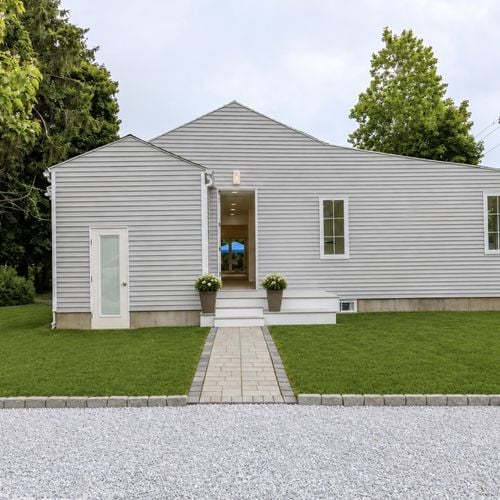
247 Clark Hill Road offered a combination of features that made it an appealing property for buyers looking for space and privacy.
The home included:
Four bedrooms and two-and-a-half bathrooms
Approximately 3,129 square feet of living space
A private 2.11-acre lot
A first-floor primary suite
A spacious eat-in kitchen with granite countertops and a center island
Multiple living and entertaining spaces
A family room with a fireplace and wood stove
A two-story deck and hot tub
An attached two-car garage
A walk-out basement and central air
The owners had also made a number of improvements, including a paved driveway, vinyl siding, well-system updates, an upgraded water softener, and electrical improvements.
These were all features we could highlight in our marketing.
But even with a well-maintained property and a strong presentation, we still needed to make an important decision about pricing.
View the original 247 Clark Hill Road property website.
The Initial Pricing Conversation: $599,900 vs. $635,000
During our listing consultation, I recommended bringing the property to market at $599,900.
My thinking was strategic.
Buyers often search for homes using maximum price filters. Listing just under $600,000 could potentially expose the home to buyers who might never see it if we listed significantly higher.
I also believed that attracting a larger group of interested buyers could create competition.
And competition is valuable.
When multiple buyers want the same property, sellers may have opportunities to negotiate not only a higher purchase price but also stronger terms.
But the sellers preferred a higher starting price.
They wanted $635,000.
That wasn't an unreasonable conversation to have. Sellers have their own goals, expectations, and comfort levels, and it's my job to explain the different approaches rather than simply dictate a price.
We ultimately agreed on $625,000.
That kept us at a deliberate search-price threshold while positioning the property closer to the sellers' preferred number.
It was a compromise we were all comfortable moving forward with.
Why I don't believe there's always one perfect list price
When I'm pricing a property, I often present multiple options and explain the potential advantages and disadvantages of each.
A lower starting price may attract more attention and create opportunities for multiple offers.
A higher starting price may establish a stronger initial asking position, but it can also reduce the number of buyers who see or consider the home.
Neither approach guarantees an outcome.
The goal is to understand the trade-offs and choose a strategy that fits the property, market, and seller's priorities.
Ten Days on Market: The Sellers Started Getting Nervous
About ten days after we listed the property, the sellers were understandably concerned.
We hadn't achieved the quick, competitive response they had hoped for.
They brought up our original pricing conversation.
Essentially, they said:
"Maybe we should have listened to you and listed at $599,900. Should we lower the price now?"
This is an important moment in any listing.
When a house doesn't sell immediately, it can be tempting to assume something is wrong with the price.
And sometimes, the price really is the problem.
But not always.
In this situation, I didn't believe we had enough evidence to justify a reduction after only ten days.
My recommendation was to stay at $625,000
I explained that we'd already committed to the $625,000 strategy.
I still believed it was a defensible asking price.
And I didn't want to reduce the price prematurely.
A quick reduction can sometimes create questions among buyers about the seller's motivation or whether there's something wrong with the property.
That doesn't mean price reductions are inherently bad. Sometimes they're exactly the right move.
But I believe they should be made based on market feedback and a clear strategy—not simply because a seller is feeling anxious.
My recommendation was to give the property more time.
The sellers agreed.
And that decision became an important part of what happened next.
Day 17: We Had Two Offers to Work With
After approximately 17 days on the market, we had two offers.
The first buyer initially came in at around $575,000.
That was approximately $50,000 below our asking price.
It would have been easy to dismiss the offer as too low.
But I've learned that an initial offer doesn't always tell you what a buyer is ultimately willing to pay.
Sometimes it's simply where they choose to begin negotiations.
Rather than shut down the conversation, I kept negotiating.
We went back and forth with that buyer while another offer was developing.
Once we had two interested buyers, the negotiating dynamic changed.
Competition gave us leverage
Having more than one buyer interested in the property created an opportunity to negotiate from a stronger position.
We could evaluate the offers, their prices, and their terms rather than relying on a single buyer's proposal.
And we used that opportunity.
Through the negotiations, we ultimately reached a $635,000 purchase price.
That's $60,000 above the approximately $575,000 initial offer and $10,000 above our original $625,000 asking price.
Importantly, that $60,000 difference represents the movement from the initial offer to the final negotiated price. It doesn't mean we can prove the second offer alone caused the entire increase.
What I can say is that we kept the negotiations alive, had two buyers competing for the property, and used that situation to secure a result the sellers were very happy with.
The Price Wasn't the Only Win: We Negotiated Better Inspection Terms
One of the biggest benefits of having competing offers is that it can create leverage beyond the purchase price.
A seller might receive a strong price but still face uncertainty from inspection contingencies, financing terms, or other conditions.
In this case, we were able to negotiate a particularly favorable inspection arrangement.
The buyer waived the general home inspection and retained only a septic inspection.
That was a meaningful benefit for the sellers.
With a general home inspection contingency, buyers may have the opportunity—depending on the contract terms—to request repairs, negotiate credits, or potentially terminate the agreement based on inspection findings.
By waiving that contingency, the buyer removed one major source of potential post-contract negotiation.
The septic inspection remained, so the transaction was not entirely free of inspection-related risk.
But compared with a contract that included a broad home inspection contingency, this was a cleaner arrangement for the sellers.
A strong offer is about more than the highest number
When I review multiple offers with sellers, I don't look at price alone.
I also consider the contingencies, financing, deposits, closing timeline, and overall likelihood of a successful closing.
A higher price can be attractive.
But the strength and certainty of the terms matter too.
At 247 Clark Hill Road, we were able to achieve both a price above asking and favorable inspection terms.
That combination was the real success.
What If We Had Listed at $599,900 Instead?
This is probably the most interesting question from the entire transaction.
My original recommendation was $599,900.
The sellers preferred $635,000.
We compromised at $625,000.
And the property ultimately sold for $635,000.
So was the $625,000 list price the better decision?
We can't know that for certain.
It's possible that listing at $599,900 would have attracted more buyers, generated more offers, and produced an even higher sale price.
It's also possible that we would have ended up with a similar result—or something different.
We don't get to run the same listing twice under identical market conditions.
What we do know is that our agreed strategy ultimately produced a successful result.
And once we had chosen that strategy, I didn't believe abandoning it after ten days was the right move.
The lesson isn't that sellers should always list high.
And it isn't that they should always list low.
The lesson is that pricing decisions should be intentional, and adjustments should be driven by evidence rather than emotion.
Why I Didn't Recommend a Price Reduction After Ten Days
There's a difference between a property that's overpriced and a property that simply hasn't found the right buyer yet.
Determining which situation you're dealing with requires evaluating the market.
When a home has been listed for a period of time, I look at the showing activity, buyer feedback, comparable properties, new competition, and whether buyers are responding to the asking price.
If the evidence shows the market isn't accepting the price, we need to discuss making a change.
But I don't believe every home should automatically be reduced after seven or ten days.
At 247 Clark Hill Road, I still believed $625,000 was a reasonable position.
And we hadn't given the strategy much time to work.
So I advised the sellers to stay the course.
Seven days later, we had two offers.
That doesn't mean waiting will always work.
It means that in this particular situation, patience was the right call.
Three Lessons East Haddam Home Sellers Can Take From This Sale
1. The best list price isn't always the highest price
I initially recommended $599,900 because I wanted to maximize exposure and potentially create a competitive bidding environment.
That strategy can work well for certain properties.
But pricing requires balancing market value, search thresholds, buyer behavior, and seller expectations.
The list price is part of the marketing strategy—not a guarantee of the final sale price.
2. Don't let anxiety make your pricing decisions
Selling a home can be stressful.
When a property doesn't sell immediately, it's natural to question whether you made the right decision.
But reacting too quickly can sometimes undermine a reasonable strategy.
At the same time, holding an unrealistic price indefinitely can be costly.
The key is knowing the difference.
3. Strong negotiation can change the outcome
Our initial offer was approximately $575,000.
The final negotiated price was $635,000.
And we obtained a waiver of the general home inspection.
That outcome required more than putting the home on the MLS and waiting for someone to buy it.
It involved keeping negotiations moving, managing the competing interest, and focusing on both price and contract terms.
My Approach to Pricing and Selling Homes in East Haddam, CT
When I meet with homeowners, I don't believe in telling them whatever number they want to hear just to get the listing.
I want to have a meaningful conversation about the property, the market, and the different strategies available.
That usually includes reviewing comparable sales, the home's condition and features, current competition, and what buyers are likely to find attractive.
I also want to understand the seller's goals.
Is maximizing price the most important consideration?
Is the timeline critical?
Do they need to purchase another home?
How much flexibility do they have?
From there, we can compare pricing options and discuss the advantages and risks of each.
And once the home is on the market, the job isn't finished.
We need to monitor buyer activity, communicate honestly, adjust when necessary, and negotiate effectively when offers come in.
247 Clark Hill Road is a good example of that approach.
We didn't agree on the initial list price right away.
We found a strategy we could all support.
When the sellers became nervous, we revisited the situation and made a deliberate decision to hold.
And when the offers arrived, we negotiated for a strong overall result.
Final Thoughts: Sometimes the Best Move Is to Stay the Course
Every property sale has its own story.
Some homes receive multiple offers immediately.
Others take longer to attract the right buyers.
And sometimes the most important decision isn't what to change—it's knowing when not to change anything.
At 247 Clark Hill Road in East Haddam, we started with different opinions about pricing.
We agreed on $625,000.
Ten days later, the sellers wondered whether we should reduce the price.
I recommended patience.
After 17 days, we had two offers.
We ultimately negotiated a $635,000 sale price, $10,000 over asking, with the general home inspection waived and only a septic inspection retained.
The sellers were extremely happy with the outcome.
And for me, that's what this business is about.
Not simply putting a sign in the yard or getting a house under contract as quickly as possible.
It's about helping people make informed decisions, protecting their interests, and negotiating the best overall result we can.
Thinking About Selling Your Home in East Haddam, CT?
If you're considering selling your home in East Haddam or a surrounding Connecticut town, I'd be happy to walk you through your options.
We'll look at what your home could realistically sell for, the advantages and disadvantages of different pricing strategies, how to prepare and market the property, and what you might walk away with after selling expenses.
You'll get my recommendation, the reasoning behind it, and the information you need to make your own decision.
Call or text Jason Boice at 860-452-3153, or visit JasonBoice.com to get started.
Frequently Asked Questions
How much did 247 Clark Hill Road in East Haddam sell for?
247 Clark Hill Road sold for $635,000 after being originally listed at $625,000. That represents $10,000 above the original asking price, or approximately 101.6% of the original list price.
How long was 247 Clark Hill Road on the market?
The property attracted two offers after approximately 17 days on the market.
Why did you originally recommend listing at $599,900?
I believed that pricing just below $600,000 could attract more buyers through common search-price filters, generate stronger showing activity, and potentially create competition. That was a strategic recommendation, not a guarantee of a particular sale price.
Why did you list at $625,000 instead?
The sellers initially preferred $635,000. After discussing the different approaches, we agreed on $625,000 as a compromise that reflected their goals while maintaining a deliberate pricing strategy.
Why didn't you reduce the price after ten days?
I still believed the $625,000 asking price was defensible, and I didn't think we had enough evidence to justify a reduction so quickly. We decided to allow more time for the market to respond.
How did the initial $575,000 offer become a $635,000 sale?
We continued negotiating with the initial buyer while another offer developed. Once we had two interested buyers, we were able to use the competitive situation to negotiate a stronger overall agreement.
Did the buyer waive inspections?
The buyer waived the general home inspection but retained a septic inspection. This reduced one significant source of post-contract uncertainty for the sellers, although the septic inspection remained a contingency.
Should East Haddam sellers always wait 17 days before reducing their price?
No. Pricing decisions should depend on comparable sales, showing activity, feedback, competing inventory, and market conditions. Some homes need a faster adjustment, while others may benefit from more time.
Is selling above asking price always a sign of a successful sale?
Not necessarily. The original list price is a marketing decision, and a sale above asking doesn't automatically mean the seller received the highest possible price. The final price, contract terms, certainty of closing, and seller's goals all matter.
About the Author
Jason Boice is a REALTOR® with eXp Realty, serving East Haddam, Hebron, Andover, Marlborough, Colchester, East Hampton, Tolland, and surrounding Connecticut communities.
Jason specializes in helping homeowners make informed decisions about pricing, preparation, marketing, and negotiation. His approach focuses on understanding each property's unique characteristics and developing a strategy around the seller's goals.
Jason Boice, REALTOR® | eXp Realty
Call or text: 860-452-3153
Website: https://jasonboice.com/
Check out this article next