

The Connecticut real estate market continues to shift as we move into winter, and the latest November 2025 data offers a clear view of where things are heading. Home prices remain strong, buyer competition is cooling, and days on market are ticking up—signs of a market that is still healthy but increasingly balanced.
Below is a breakdown of the most important trends from the latest data and what they mean for homeowners, buyers, and sellers heading into 2026.
Home Prices Continue to Rise Despite Fewer Sales
While the number of homes sold has fallen, prices continue to move upward across Connecticut.
November 2025 Highlights:
Median Sale Price: $425,000 (up 9% year-over-year)
Average Sale Price: $613,786 (up 14.6%)
Average Price per Sqft: $292 (up 10.1%)
Number of Sales: 2,590 (down 11.3%)
This combination—rising prices and falling sales—reflects an environment where demand remains steady but inventory remains limited. Fewer homes on the market naturally lead to fewer sales, even while buyer interest stays active enough to keep prices appreciating.
Chart: November Snapshot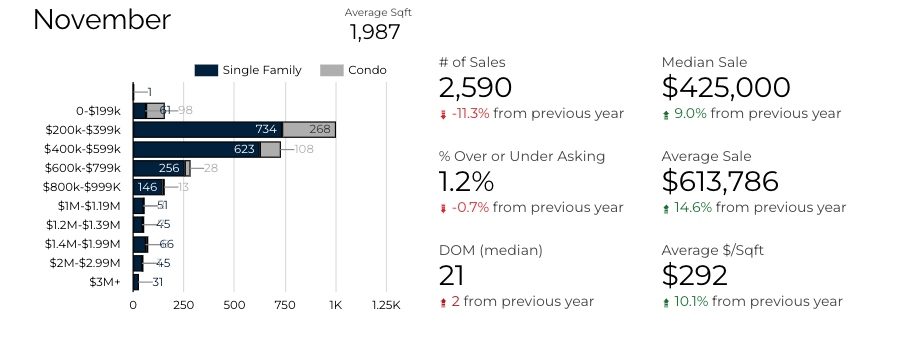
Buyer Demand Is Still Seasonal—And Winter Is the Least Competitive Window
If you’re a buyer, this is one of the most important charts to understand.
Competition peaks every year in late spring and early summer, when buyers consistently pay the largest premiums above asking price. As fall and winter arrive, bidding activity and showing volume decrease.
This year followed the same pattern:
Summer 2025 saw buyers paying 3–4% over asking on average
November 2025 dropped to 1.11% over asking
Showing activity per listing has also declined as the year ends
This seasonal cooling creates opportunities for buyers who prefer less competition and more negotiating power.
Chart: Buyer Demand (Average % Over Asking + Number of Sales)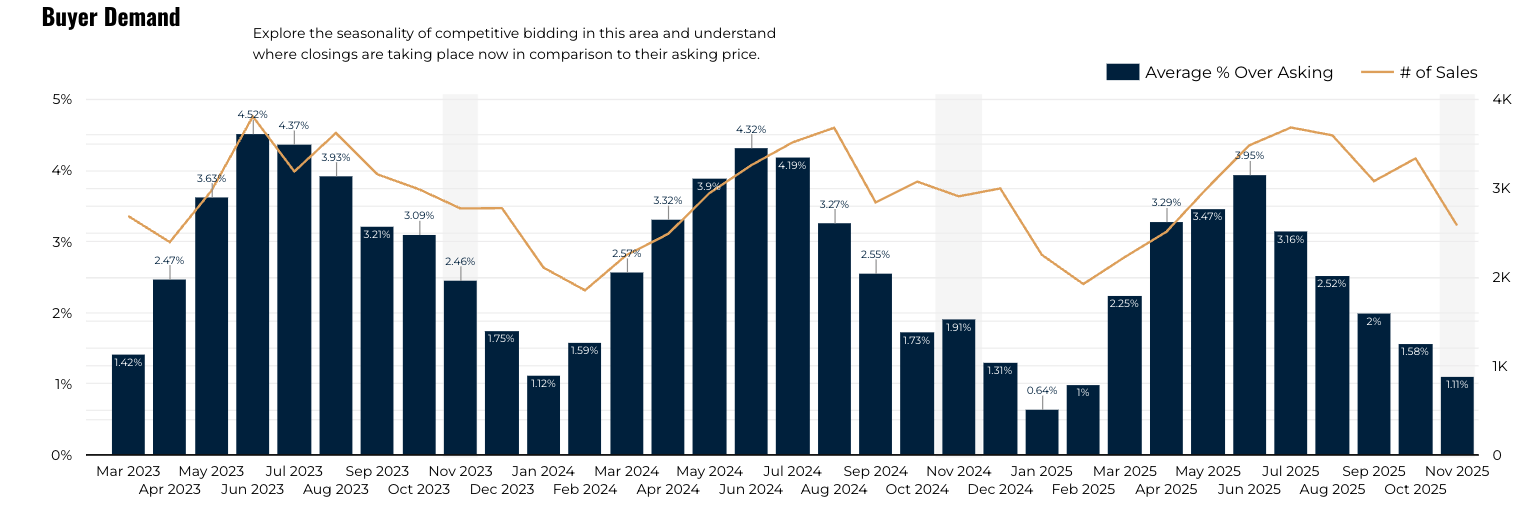
Days on Market Rising Into Winter—But Still Low Historically
The Days on Market (DOM) trend offers another clear picture of buyer activity.
DOM is lowest in spring and summer (around 14–16 days)
DOM increases through fall and winter (21–28 days)
November 2025 recorded 21 days on market, up from the summer lows
This increase is normal for the season—not a sign of weakening prices. Compared to pre-2020 norms, homes are still selling incredibly quickly.
For homeowners, this means properly priced homes continue to move.
For buyers, slightly longer DOM means less pressure to rush into decisions.
Chart: Days on Market Trend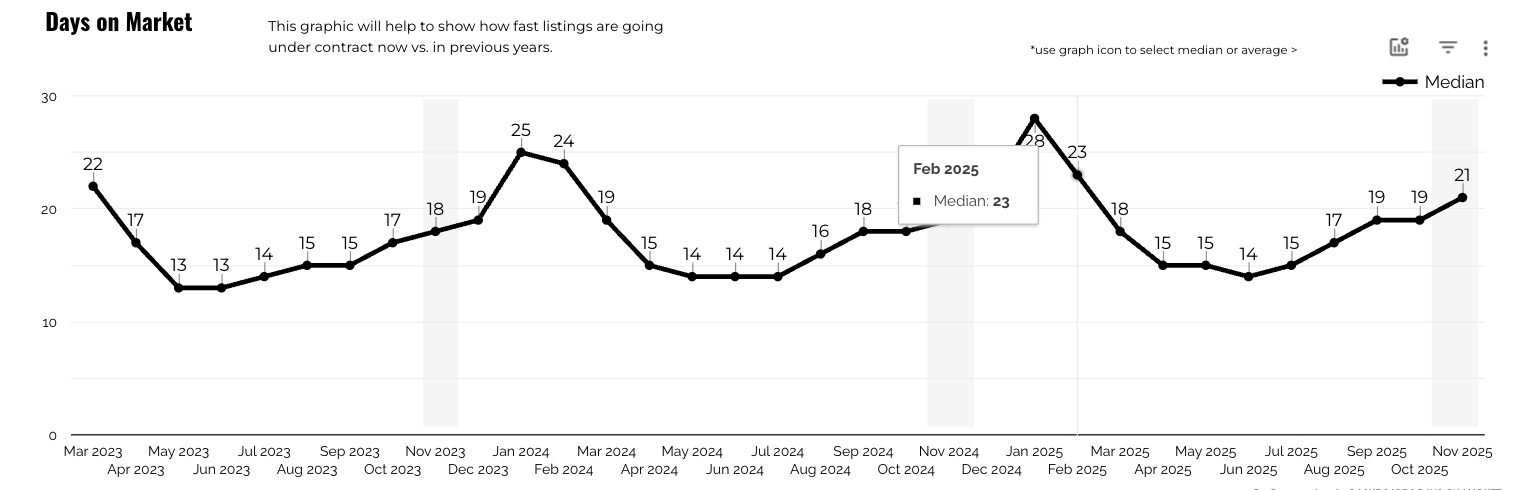
Which Price Ranges Are Most Competitive? A Look at Buyer Behavior by Segment
The “Buyer Demand by Price Range” data shows how different parts of the market behave—and where competition is strongest.
$200k–$399k Range
Most active price point with over 12,000 sales YTD
Median DOM: 14 days
Average % over asking: 2.53%
Very competitive, driven by first-time buyers and downsizers
$400k–$599k Range
Strong demand from move-up buyers
Median DOM: 16 days
% over asking: 2.78%
Still a highly competitive segment
$600k–$799k Range
Strong but more moderate demand
Median DOM: 19 days
% over asking: 2.71%
$1M–$1.39M Range
One of the strongest luxury segments
Buyers paid up to 4.45% over asking on average
Well-presented luxury homes attract serious offers
$2M+ and $3M+ Range
Longest days on market (28–32 days)
Minimal over-asking
A more selective buyer pool, typical of luxury markets
This breakdown allows buyers and sellers to set realistic expectations based on their price category.
Chart: Buyer Demand by Price Range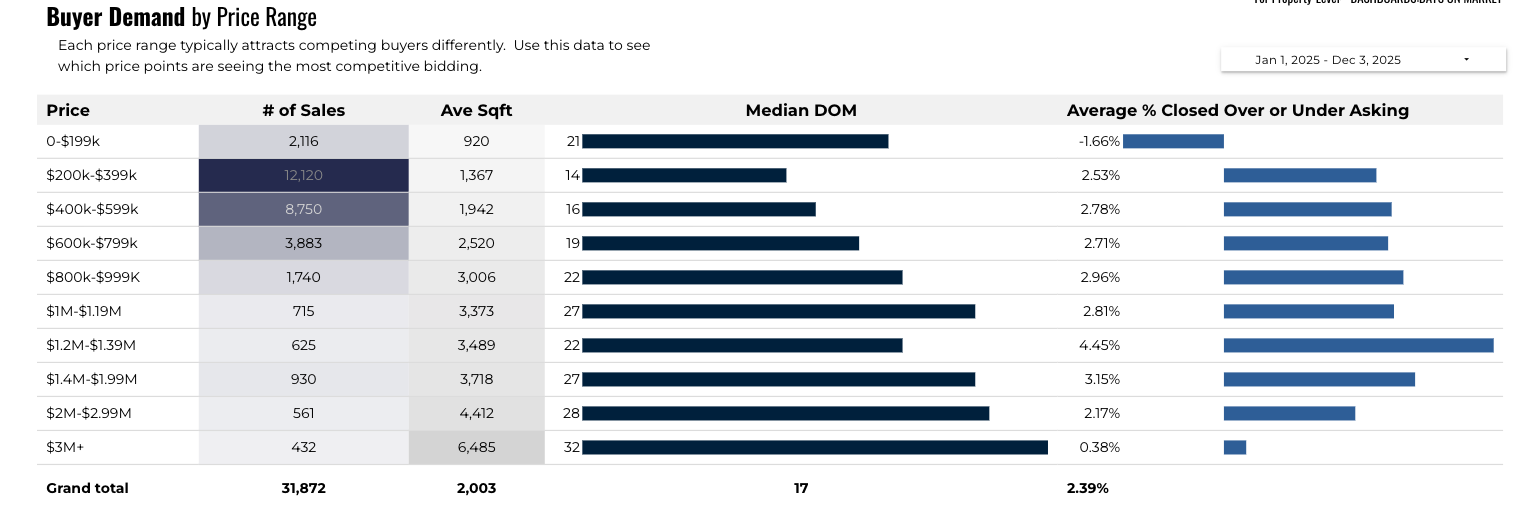
What This Means for Buyers and Sellers Heading Into 2026
For Buyers
Winter offers the best leverage of the year
Fewer bidding wars and more negotiating room
Days on market are higher—meaning more time to think and inspect
If you’ve been waiting for the market to cool slightly, this is your moment.
For Sellers
Prices are still rising and inventory remains tight
Properly priced homes continue to sell quickly
If you’re considering a spring listing, now is the time to prepare
Competition among buyers will return as we get closer to May–June
For Homeowners Staying Put
Your equity continues to grow
The market is stable, not declining
Local data still strongly favors long-term appreciation
Final Thoughts
The Connecticut housing market remains strong but is shifting into a more balanced pattern. Buyers are getting a bit more breathing room, sellers are still benefiting from rising prices, and both sides are heading into 2026 with better predictability and healthier conditions.
If you'd like a breakdown of how these trends impact your specific town—or if you want to know what your home might be worth right now—I’m always happy to help.
Check out this article next