By Jason Boice, REALTOR® | eXp Realty
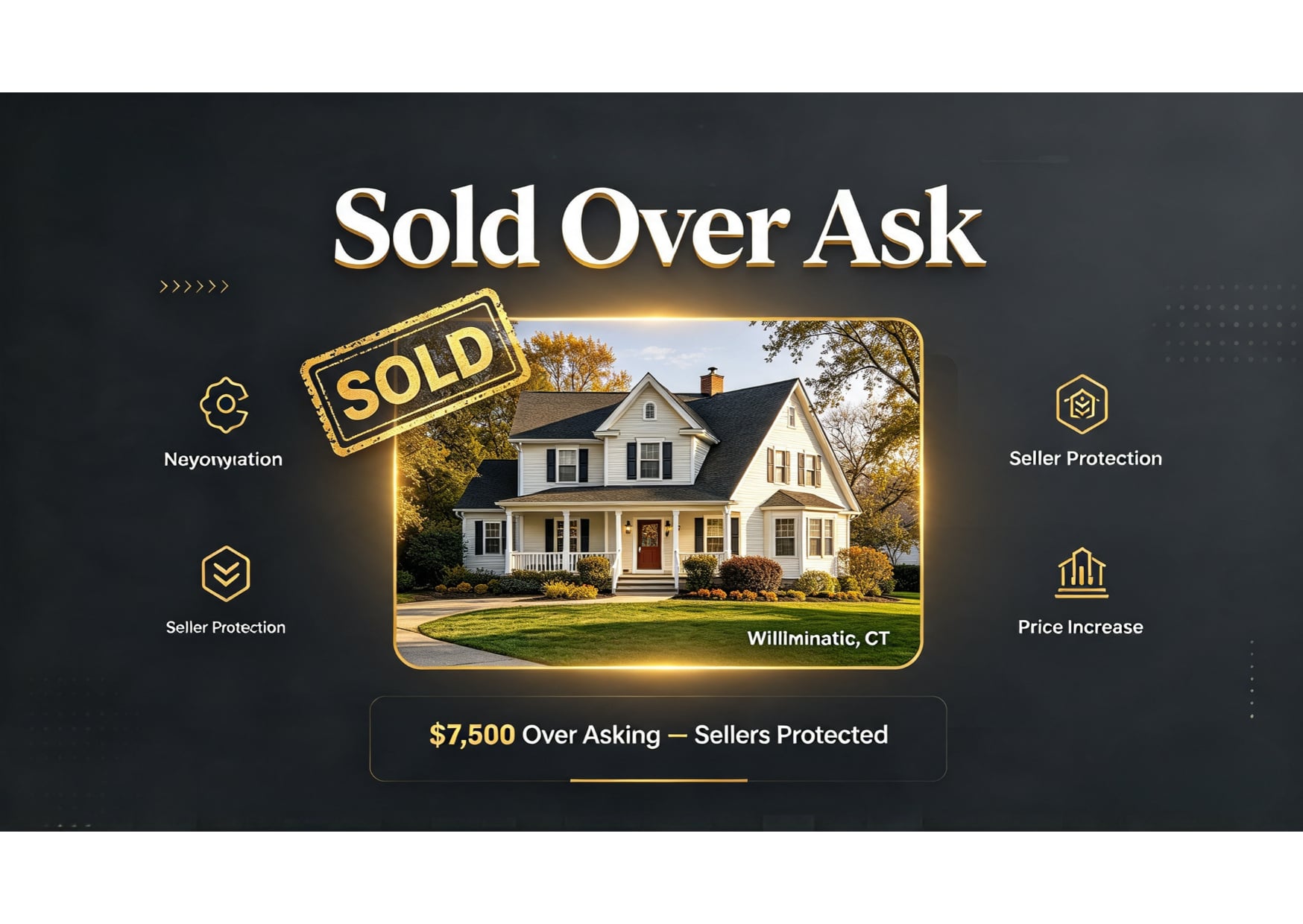
Three offers. Eight days on the market. A sale price $7,500 above asking. And a negotiation strategy that helped protect the sellers from unexpected FHA repair expenses.
When homeowners think about a successful real estate sale, they often focus on one number: the final selling price.
And while getting a strong price is important, there's much more to a successful transaction.
The type of financing a buyer is using, the inspection contingencies, the condition of the property, and the responsibilities negotiated in the purchase contract can all affect how much money a seller ultimately walks away with.
That's something I pay close attention to when representing sellers.
And it's exactly what happened when I listed 371 Prospect Street in Willimantic, Connecticut.
We received three offers and secured a contract for $370,000 after just eight days on the market.
But one of the most important parts of this sale wasn't the price.
It was anticipating an issue with FHA financing and negotiating terms that protected my sellers before that issue ever became a problem.
Here's how the transaction unfolded.
At a Glance: 371 Prospect Street Sale Results
| Sale Detail | Result |
|---|---|
| Property | 371 Prospect Street, Willimantic, CT |
| Town | Windham, Connecticut |
| Year Built | 1908 |
| Original List Price | $362,500 |
| Final Sale Price | $370,000 |
| Amount Above Asking | $7,500 |
| Sale Price / Original List Price (%OLP) | 102.07% |
| Days on Market Before Contract | 8 |
| Number of Offers | 3 |
| Accepted Buyer Financing | FHA |
The bottom line: We attracted three offers, negotiated a price approximately 2.1% above the original asking price, and structured the contract so the buyer would be responsible for FHA-required repairs.
That last part turned out to be particularly important.
The Challenge: Selling a Home Built in 1908
371 Prospect Street was built in 1908.
Like many older homes throughout Willimantic and Windham, it had characteristics that required careful consideration when evaluating offers.
Older properties can be attractive to buyers because of their character, established neighborhoods, and architectural details.
But they can also present challenges during inspections and appraisals.
Depending on the condition of the property, those challenges might involve older mechanical systems, electrical components, safety concerns, or deferred maintenance.
At 371 Prospect Street, one issue I was particularly concerned about was peeling paint on portions of the garage and garage windows.
To some buyers, that might seem like a relatively minor cosmetic concern.
But when a buyer is using FHA financing, peeling paint can become much more significant.
Why FHA Financing Can Complicate the Sale of an Older Home
FHA loans are insured by the Federal Housing Administration and are commonly used by buyers who want a lower down-payment option.
However, FHA financing also involves property-condition requirements.
An FHA appraisal doesn't simply evaluate whether the house supports the purchase price.
The appraiser also considers certain safety, security, and soundness requirements.
For homes built before 1978, deteriorating paint can be a particular concern because of potential lead-based paint hazards.
If the appraiser identifies required repairs, those repairs generally must be addressed in accordance with the lender's requirements before the loan can close.
And that's where a seemingly minor issue can turn into a negotiation problem.
If the seller and buyer haven't already discussed who is responsible for those repairs, the transaction can become more complicated.
The seller might be asked to pay for work they hadn't anticipated.
The buyer might not have the money available.
Or the closing could be delayed while everyone tries to reach an agreement.
My goal was to address that risk before we accepted an offer—not after the appraisal identified a problem.
Three Offers in Eight Days: Evaluating More Than Just the Price
We listed 371 Prospect Street for $362,500.
Within eight days, we had received three offers.
That's the kind of response sellers hope to see when their property first comes onto the market.
But receiving multiple offers doesn't mean you should automatically accept whichever buyer offers the most money.
I believe one of the most important responsibilities of a listing agent is helping sellers understand the complete picture.
When reviewing offers, I consider much more than the purchase price.
I look at the buyer's financing, contingencies, inspection terms, appraisal considerations, closing timeline, and any potential expenses that could arise before closing.
At 371 Prospect Street, the highest offer was from a buyer using FHA financing.
The price was attractive.
But because I was already aware of the peeling paint, I knew there was a reasonable possibility the FHA appraiser would require some repairs.
That created an important question:
Could we accept the strongest purchase price without exposing the sellers to unexpected FHA repair costs?
I believed we could, but we needed to negotiate the contract carefully.
The Negotiation That Helped Protect My Sellers
Rather than simply accepting the highest offer and hoping the FHA appraisal went smoothly, I addressed the potential repair issue during our negotiations.
I negotiated a provision into the purchase contract requiring the buyer to take responsibility for completing FHA-required repairs.
The buyer agreed.
That was an important concession.
It allowed my sellers to move forward with the $370,000 offer while establishing responsibility for a category of repairs that might otherwise have become a financial burden for them.
Why I Wanted This Addressed Before Contract Acceptance
Consider what could have happened without that agreement.
We could have accepted the $370,000 offer.
The buyer could have completed their inspections.
Then the FHA appraiser could have identified peeling paint or other required repairs.
At that point, the buyer might have asked my sellers to complete the work or provide additional financial concessions.
Even though we'd negotiated a strong purchase price, the sellers could have ended up facing unexpected costs.
Instead, we'd already addressed who would handle FHA-required repairs.
The goal wasn't just to get the highest offer. It was to protect the value of that offer all the way through closing.
Of course, any repair arrangement must comply with the lender's requirements and the parties' contract. Negotiating buyer responsibility doesn't eliminate FHA property standards.
But in this transaction, the arrangement worked as intended.
The FHA Appraisal Confirmed Our Concerns
After the property was under contract, the FHA appraisal took place.
And as I had anticipated, the appraiser identified several items requiring attention.
Those included:
Scraping and repainting portions of the garage
Scraping and repainting garage windows
Addressing a second-floor door locking mechanism
Covering an electrical junction box in the attic
These weren't hypothetical concerns anymore.
They were actual items that needed to be addressed for the transaction to proceed.
Because we had already negotiated the repair responsibility, the buyers handled the required work.
My sellers weren't suddenly faced with an unexpected FHA repair list they had to pay for.
There were also a few relatively minor items identified during the buyer's home inspection, which were addressed as part of the transaction.
Ultimately, the required work was completed, the financing requirements were satisfied, and the transaction successfully closed.
Why This Was a Win for the Sellers
The benefit wasn't simply avoiding a difficult conversation.
We were able to preserve the agreed-upon $370,000 purchase price without the sellers having to take on the FHA-required repairs.
That mattered because a seller's actual financial outcome is determined by more than the price written on the contract.
Unexpected repair expenses, credits, and renegotiations can all affect the final result.
By recognizing the risk ahead of time, we were able to negotiate terms that worked in my sellers' favor.
Why the Highest Offer Isn't Always the Best Offer
This is one of the most important lessons I share with sellers.
Imagine receiving three offers on your home.
One buyer offers the highest price but has financing requirements that may create additional expenses.
Another offers slightly less but has stronger financing or fewer contingencies.
A third offers a competitive price but needs a longer closing timeline.
Which one should you accept?
There isn't one answer that applies to every transaction.
The strongest offer depends on the entire package.
What I Review When Comparing Offers
Purchase price: How much is the buyer offering?
Financing: Is the buyer using conventional, FHA, VA, or cash financing?
Appraisal considerations: Is there a risk the property won't appraise at the agreed-upon price?
Inspection terms: What inspections are being requested, and how might they affect the transaction?
Repair responsibilities: Are there known issues that could lead to additional expenses?
Buyer qualifications: Does the buyer appear financially prepared to complete the purchase?
Closing timeline: Does the proposed closing date work for the sellers?
Overall likelihood of closing: Are there conditions that could make the transaction less reliable?
At 371 Prospect Street, we ultimately accepted the highest offer.
But I didn't want my sellers to focus only on the $370,000 price.
I wanted them to understand the financing-related risks and how we could address them.
By negotiating responsibility for FHA-required repairs upfront, we improved the overall terms of the transaction.
That's the difference between simply receiving a strong offer and negotiating a strong contract.
Strategic Pricing Helped Generate Buyer Competition
Another important part of this sale was our original pricing strategy.
We brought 371 Prospect Street to market at $362,500.
After eight days, we had three offers and secured a contract for $370,000.
That's a sale price of 102.07% of the original asking price.
I believe pricing is one of the most important decisions sellers make before listing their property.
Some homeowners assume that starting with the highest possible asking price gives them more room to negotiate.
But that's not always how buyers behave.
If a home is priced too high compared with competing properties, buyers may simply overlook it.
The listing can accumulate days on market, showing activity can decline, and eventually the seller may need to consider a reduction.
My Approach to Pricing a Home
I evaluate comparable closed sales, active listings, properties under contract, and the condition and features of the home itself.
I also consider what buyers are currently responding to.
My goal isn't to choose the highest asking price I can justify.
It's to position the property where it can attract serious buyers and create the strongest opportunity for a successful sale.
At 371 Prospect Street, the response was encouraging.
Three offers in eight days gave us options.
And having multiple offers allowed us to evaluate not just price, but the overall terms each buyer was willing to provide.
Selling an Older Home in Willimantic: What Should You Fix Before Listing?
This transaction also illustrates why I don't automatically recommend that sellers renovate everything before putting their house on the market.
Some repairs are worth addressing ahead of time.
Others may not provide a meaningful return.
And certain conditions can affect which buyers are able to finance the property.
For example, peeling paint on a pre-1978 home may be more than a cosmetic issue if the buyer is using FHA financing.
Exposed wiring, certain safety concerns, or other property-condition issues can also create financing complications.
But that doesn't necessarily mean every issue needs to be corrected before the home is listed.
Sometimes the best approach is to complete the work in advance.
Sometimes it makes sense to price the property with its condition in mind.
And sometimes the responsibility for repairs can be negotiated as part of the purchase agreement.
What I Recommend Before Listing
When I meet with homeowners, I like to walk through the property and identify potential concerns.
Then we can discuss:
Which improvements may help the home show better
Which repairs could affect financing or inspections
Which updates may not be worth the expense
How the property's condition compares with competing homes
Whether selling as-is is a reasonable option
How to position the home for the likely buyer pool
The goal is to avoid spending money unnecessarily while also reducing the risk of problems that could derail the sale.
That's especially important with older homes.
What Homeowners in Willimantic and Windham Can Learn From 371 Prospect Street
There are five lessons I'd emphasize from this transaction.
1. The right asking price can help create competition
Our $362,500 asking price attracted three offers within eight days.
That gave my sellers options and helped us negotiate a sale above asking.
2. Financing terms matter
FHA, VA, conventional, and cash buyers can present different considerations.
A strong listing agent should understand how those differences may affect the seller.
3. Anticipating problems is better than reacting to them
We knew peeling paint could become an FHA appraisal issue.
Rather than waiting for the problem to arise, we addressed repair responsibility during negotiations.
4. The best contract protects the seller's interests
The highest purchase price isn't always the strongest overall offer.
Repair responsibilities, contingencies, and the likelihood of closing all matter.
5. Negotiation doesn't end when the offer is accepted
Even after a property goes under contract, inspections, appraisals, financing requirements, and closing coordination can create challenges.
The job isn't finished until the transaction closes.
At 371 Prospect Street, we were able to navigate those issues and deliver a successful outcome.
Thinking About Selling a House in Willimantic, Windham, or Eastern Connecticut?
Every home is different.
And if you own an older property, it's particularly important to understand how its condition, pricing, and potential financing issues may affect your sale.
I help homeowners throughout Willimantic, Windham, Hebron, Columbia, Coventry, Mansfield, and surrounding Eastern Connecticut communities evaluate their options before listing.
That includes discussing what your home may realistically sell for, which improvements are worth considering, and which repairs may not make financial sense.
From there, I develop a pricing and marketing strategy designed around the property and current market conditions.
And when offers arrive, I look beyond the purchase price to help protect your interests throughout the transaction.
If you're thinking about selling, I'd be happy to walk through your home and help you develop a plan.
Visit JasonBoice.com or call or text 860-452-3153.
Frequently Asked Questions About Selling a Home in Willimantic, CT
How much did 371 Prospect Street in Willimantic sell for?
371 Prospect Street sold for $370,000 after being originally listed for $362,500. The sale price was $7,500 above asking, or 102.07% of the original list price.
How long did 371 Prospect Street take to sell?
The property received three offers and went under contract after eight days on the market.
Can you sell a house with peeling paint using FHA financing?
Yes, but deteriorating paint may need to be corrected before the loan can close. This is especially important for homes built before 1978 because of potential lead-based paint hazards.
Does the seller have to pay for FHA-required repairs?
Not necessarily. Responsibility for repairs may be negotiated between the buyer and seller, subject to the lender's requirements and the purchase contract. At 371 Prospect Street, we negotiated for the buyer to handle FHA-required repairs.
Is an FHA offer risky for a seller?
Not automatically. FHA financing can be a good option, but sellers should understand the appraisal and property-condition requirements. The strength of an offer depends on the complete terms and the buyer's ability to close.
Is the highest offer always the best offer?
No. Financing, appraisal risk, inspection contingencies, repair responsibilities, and closing timelines can all affect the seller's final proceeds and the likelihood of closing.
Should I fix peeling paint before listing my house?
It depends on the property, likely financing options, and the scope of the issue. For older homes, peeling paint can affect certain financing programs, so it's worth evaluating before listing.
Can a buyer complete FHA-required repairs before closing?
In some circumstances, buyer responsibility can be negotiated, but the actual repair arrangements must comply with the lender's requirements and applicable rules. At 371 Prospect Street, the buyers handled the FHA-required work under the negotiated agreement.
Should I make repairs before selling an older home in Willimantic?
Not necessarily every repair. Some improvements can help marketability or reduce financing concerns, while others may not justify their cost. An in-person evaluation can help prioritize them.
What should I look for in a Willimantic real estate agent?
Look for someone who understands local pricing, property condition, financing requirements, marketing, and contract negotiation—and who can explain how each affects your sale.
About the Author
Jason Boice | REALTOR® | eXp Realty
Jason Boice is a Connecticut real estate professional helping buyers and sellers throughout Eastern Connecticut, including Willimantic, Windham, Hebron, Amston, Marlborough, Colchester, Andover, Columbia, Coventry, Mansfield, and East Hampton.
Jason specializes in strategic pricing, professional property marketing, contract negotiation, and helping homeowners navigate the challenges that can arise between listing and closing.
His approach focuses on protecting his clients' interests, anticipating potential issues, and helping sellers make informed decisions throughout the transaction.
Website: JasonBoice.com
YouTube: @JasonBoice
Call or text: 860-452-3153
Connecticut Real Estate License: RES.0821682
Every transaction is different. Results from this sale do not guarantee similar results for other properties.
Check out this article next