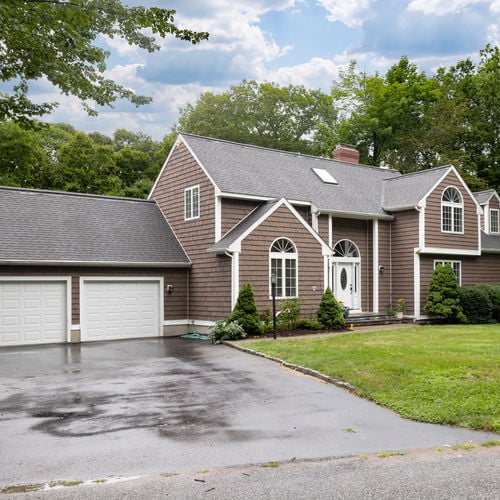

You accepted an offer on your Connecticut home.
The inspections are scheduled. You're thinking about packing. Maybe you're already planning the closing on your next house.
Then your agent calls:
The buyer wants out.
What happens next depends heavily on why they're backing out and what their contract allows them to do.
The three situations I see most often involve inspections, financing, and buyers getting cold feet—and cold feet have become particularly relevant in a fast-moving market.
Buyers sometimes have to make a decision after seeing a house once, compete against multiple offers, and commit to hundreds of thousands of dollars within a matter of days. Occasionally, after the excitement wears off, they start questioning the decision.
But wanting out and having a contractual right to get out aren't necessarily the same thing.
That's why sellers need to understand the contingencies in the offer they're accepting—and why I don't recommend choosing an offer based solely on the highest number at the top of the page.
Important: This article discusses common Connecticut real estate situations from a real estate agent's perspective. Your purchase and sale agreement controls the parties' rights and obligations. Questions about whether a buyer can legally terminate a contract or whether a deposit must be returned or forfeited should be addressed by the parties' Connecticut real estate attorneys.
TL;DR
A Connecticut buyer may be able to terminate a home purchase without losing their deposit when they have a valid contractual right to do so.
The three major contingencies I pay particular attention to are:
- Inspection
- Financing
- Appraisal
If a buyer simply gets cold feet outside of an available contractual right to terminate, their deposit may be at risk. The actual outcome depends on the contract and should be determined by the attorneys.
If a buyer does back out, my strategy for the seller depends on what we have available.
Do we have backup offers?
Are other buyers still interested?
Does negotiating with the current buyer make more financial sense than returning to the market?
There isn't one automatic response.
And ideally, we start reducing the risk of a failed transaction before we ever accept the original offer.
Why Are Connecticut Buyers Backing Out?
There can be dozens of reasons a real estate transaction falls apart.
But right now, the three I encounter most often are:
1. Inspection Issues
The buyer discovers something during their inspections that concerns them.
It might involve:
- Septic
- Well
- Roof
- Foundation
- Electrical
- Plumbing
- HVAC
- Water intrusion
- Structural issues
- Mold or environmental concerns
Sometimes it's one major problem.
Other times, it's the cumulative effect of a long inspection report.
Depending on the inspection contingency in the contract, the buyer may have the ability to request repairs or credits, attempt to renegotiate, or terminate within the applicable inspection period.
That's one reason inspection terms matter so much when we're comparing offers.
2. Financing Falls Apart
A preapproval is important.
But it isn't a guarantee that the buyer will ultimately receive the mortgage.
Things can change between offer and closing.
A financing issue could involve the buyer's qualification, documentation, employment, debt, lender underwriting, or another condition that prevents the loan from being approved.
If the contract contains a financing contingency and its requirements are satisfied, the buyer may have a contractual path to terminate if they cannot obtain the required financing.
For a seller, this can be particularly frustrating because the problem may have nothing to do with the house.
You can do everything correctly and still lose the transaction because the buyer can't close.
3. The Buyer Gets Cold Feet
This is different.
I've seen buyers become overwhelmed by the speed of the market.
They tour a home.
They love it.
They learn there are other offers.
Suddenly they're being asked to make major decisions very quickly.
They write aggressively because they're afraid of losing the house.
Then they get under contract and have time to think.
That's when the doubts can begin:
Did we pay too much?
Is this really the right house?
Should we have waited?
Can we really afford this?
Cold feet by itself doesn't necessarily give a buyer a contractual right to cancel the transaction and receive their deposit back.
If there isn't an available contingency or other contractual basis allowing the buyer to terminate, the buyer's deposit may be at risk if they simply decide they don't want to proceed.
That's when the attorneys need to become involved.
The Three Contingencies Connecticut Sellers Should Understand
When I'm reviewing offers with a seller, I pay particularly close attention to three areas.
Inspection Contingency
This determines the buyer's inspection rights and what options may be available following inspections.
The specific terms matter.
There's a significant difference between an offer with broad inspection protections and an offer with limited inspection rights—or an offer where inspections are waived entirely.
From a seller's perspective, less inspection exposure generally means greater certainty after accepting the offer.
But that doesn't mean sellers should automatically choose whichever buyer waives the most.
We need to look at the entire offer.
Financing Contingency
If the buyer needs a mortgage, we want to understand the strength of their financing.
A seller shouldn't look at a preapproval letter and simply assume:
"They're preapproved, so financing isn't a risk."
I want to look deeper.
What type of financing are they using?
How much are they putting down?
Are there any unusual conditions?
How strong does the overall financial picture appear?
The financing contingency itself also matters because it establishes important contractual protections and obligations surrounding the buyer's mortgage.
Appraisal Contingency
Even a financially qualified buyer can encounter another problem:
The house doesn't appraise for the purchase price.
What happens next depends on the offer.
The buyer may have an appraisal contingency.
They may agree to cover a certain appraisal gap.
They may waive appraisal protections.
If there is an applicable appraisal contingency and the property appraises below the purchase price, there may be an opportunity to renegotiate—or, depending on the contractual terms, potentially terminate.
That's why an offer for $10,000 more isn't necessarily $10,000 better.
If that extra $10,000 depends entirely on the appraisal supporting it, another offer with a lower purchase price but substantial appraisal-gap coverage might actually create more certainty for the seller.
What Happens to the Buyer's Deposit?
This is usually one of the seller's first questions:
"Don't I just get their deposit?"
Not necessarily.
If the buyer properly terminates under a contractual contingency, the contract may provide for the deposit to be returned.
If a buyer simply gets cold feet and attempts to walk away without an available contractual basis, the deposit may be at risk.
But sellers shouldn't make their own determination about who is entitled to the deposit.
That becomes a contract and legal issue.
The attorneys should review the agreement, the reason for termination, whether applicable deadlines and requirements were satisfied, and determine the parties' rights regarding the deposit.
As the listing agent, my job is to help the seller understand the real estate implications and develop the strategy for what happens next.
If the Buyer Backs Out During Inspections, Should You Negotiate?
Sometimes.
This is where I don't believe in blanket rules.
Suppose the buyer discovers an inspection issue and asks for a $5,000 credit.
Should you agree?
My first question isn't necessarily:
"Is their request reasonable?"
It's:
"What are our alternatives?"
If we received ten offers and have three other buyers waiting for an opportunity, our negotiating position may be very different.
If this was our only offer after 45 days on market, we need to consider that too.
The seller may have several options depending on the contract and circumstances:
- Negotiate with the existing buyer
- Agree to certain repairs
- Offer a credit
- Decline the request
- Allow the transaction to terminate
- Approach backup buyers
- Contact previously interested buyers
- Return the property to the market
The best financial decision isn't always the most emotionally satisfying one.
A seller might understandably be irritated by a buyer's request.
But if resolving a legitimate $2,000 problem keeps a strong transaction together, while returning to market could cost significantly more, that's worth considering.
Conversely, if we have an excellent backup offer, there may be little reason to make a major concession.
The strategy depends on the leverage we actually have.
What If We Already Had Multiple Offers?
This is where a strong initial launch can continue paying dividends even after you've accepted an offer.
If we've generated multiple offers, I don't simply forget everyone else the moment the seller chooses a buyer.
Depending on the circumstances, another buyer may be willing to remain interested as a backup.
And even without a formal backup contract, knowing who else seriously wanted the property can be extremely valuable if the first transaction falls apart.
If Buyer #1 terminates, we may be able to immediately reconnect with Buyer #2 or Buyer #3 rather than effectively starting from zero.
This is another reason the first week on market matters so much.
Multiple offers don't just create leverage on price.
They can create options.
The Better Strategy: Reduce the Risk Before Accepting an Offer
When sellers receive multiple offers, there's a temptation to sort them from highest price to lowest price and choose the one at the top.
I don't recommend doing that.
Instead, I'm looking for the best combination of price and probability of actually closing.
Three things I pay particular attention to are:
1. Price
Obviously, the amount the buyer is willing to pay matters.
But then we need to determine how solid that number really is.
2. Appraisal Protection
Does the buyer have a traditional appraisal contingency?
Are they guaranteeing an appraisal gap?
Have they waived appraisal protections?
If we're accepting an aggressive price, this becomes particularly important.
3. Inspection Terms
How much inspection exposure does the seller have?
Is it a traditional inspection contingency?
Are inspections limited?
Are they waived?
Every reduction in contingency risk potentially increases the seller's certainty of reaching closing.
The goal isn't necessarily:
Choose the highest offer.
It's:
Choose the offer that gives the seller the strongest combination of price, terms, and likelihood of closing.
Real Connecticut Example #1: 435 Old Hebron Road, Colchester
We saw exactly how powerful that strategy could be when I listed 435 Old Hebron Road in Colchester.
We deliberately priced and marketed the property to generate significant buyer competition.
The response was enormous.
The property received 19 offers and ultimately sold for $735,500 after being listed at $625,000.
But the $110,500 difference between list and sale price wasn't the only important result.
We were also able to negotiate an offer with no inspection contingency and no appraisal contingency.
That matters.
Once my seller accepted that offer, two of the major potential failure points of the transaction had already been substantially reduced.
List Price: $625,000
Sale Price: $735,500
Offers: 19
Days on Market: 3
Inspection Contingency: Waived
Appraisal Contingency: Waived
See how we sold 435 Old Hebron Road
The lesson isn't that every seller should demand waived contingencies.
Most sellers won't receive 19 offers.
The lesson is that creating competition can give a seller choices beyond price.
Real Connecticut Example #2: 402 Ash Swamp Road, Glastonbury
We had another example at 402 Ash Swamp Road in Glastonbury.
Again, strong preparation, competitive positioning, and marketing generated multiple offers.
We received six offers, which gave us leverage when deciding which buyer represented the strongest overall transaction.
The successful buyer ultimately waived inspections.
See how we sold 402 Ash Swamp Road
Neither of these transactions is an example of a buyer backing out.
They're examples of something I think is even more useful for sellers:
How we can reduce some of the risks of a buyer backing out before the seller ever accepts an offer.
You can't eliminate every risk.
A buyer can still have a financing problem. Unexpected circumstances can occur. Contracts can become complicated.
But when the market gives us leverage, we can use that leverage to negotiate not only a better price—but a stronger transaction.
Is a Cash Offer Less Likely to Fall Apart?
Potentially, because a true cash purchase eliminates mortgage financing as a potential failure point.
But that doesn't automatically make every cash offer better.
A cash buyer could still have:
- Inspection protections
- Attorney-related issues
- Other contractual contingencies
- Cold feet
And a well-qualified financed buyer may offer substantially better terms or a higher price.
Again, I wouldn't choose an offer based on one variable.
Look at the entire package.
What Happens If Your Home Has to Go Back on the Market?
If the transaction terminates and we don't have another buyer ready, then we need to determine how to reposition the property.
One concern sellers often have is:
"Will buyers think something is wrong with the house?"
Some may wonder why the property returned to the market.
That's unavoidable.
But what we do next depends heavily on why the transaction failed.
If financing fell apart, that's very different from discovering a major structural issue during inspections.
If an inspection uncovered a legitimate property problem, we need to decide whether to address it before going back to market.
If the buyer simply got cold feet, the underlying property may not have changed at all.
This is why understanding why the deal died is critical before deciding what to do next.
Don't Panic If a Buyer Backs Out
Losing a buyer is frustrating.
Sometimes it's expensive.
And if you're simultaneously purchasing another home, it can create a serious timing problem.
But a failed transaction doesn't necessarily mean the entire sale has failed.
The first questions I want answered are:
Why did the buyer terminate?
Did they have a contractual right to do so?
What do our attorneys say about the contract and deposit?
Do we have backup or previous offers?
Are other buyers still interested?
Did we learn something about the property that needs to be addressed?
Is saving the existing transaction possible and financially sensible?
Once we know those answers, we can make a rational decision rather than reacting emotionally.
The Offer You Accept Matters Just as Much as the Offers You Receive
Sellers understandably get excited when they receive multiple offers.
But generating multiple offers is only half the job.
Choosing and negotiating the right one is the other half.
An offer that's $5,000 higher but has significant inspection and appraisal exposure isn't automatically better than an offer that's $5,000 lower with substantially stronger terms.
Sometimes it is.
Sometimes it isn't.
That's why I want sellers looking at the whole transaction:
Price + Financing + Appraisal + Inspections + Other Terms + Probability of Closing
The number that matters most isn't necessarily the number written on the original offer.
It's the amount you actually net when the transaction closes.
Thinking About Selling a Home in Connecticut?
If you're preparing to sell, our strategy shouldn't begin when the offers arrive.
It should begin before the home ever hits the market.
That includes:
- Preparing the property
- Choosing the right pricing strategy
- Creating strong buyer exposure
- Generating competition when possible
- Evaluating financing
- Comparing inspection terms
- Evaluating appraisal risk
- Negotiating the strongest overall offer
- Maintaining backup options when appropriate
We can't guarantee that a buyer will never back out.
But we can make strategic decisions designed to reduce the risk and put you in a stronger position if something goes wrong.
Call or text Jason Boice at 860-452-3153 for a no-pressure consultation.
Frequently Asked Questions
Can a buyer back out of a home purchase in Connecticut?
Potentially. A buyer's ability to terminate depends on the purchase agreement and circumstances. Inspection, financing, and appraisal contingencies may provide contractual rights to terminate when their requirements are met. A Connecticut real estate attorney should interpret the contract in a specific transaction.
Can a buyer back out after a home inspection in Connecticut?
Depending on the inspection contingency, a buyer may be able to request repairs or concessions, negotiate with the seller, or terminate within the applicable inspection period. The specific language of the contract determines the parties' rights.
What happens to the buyer's deposit if they back out?
It depends on why and how the buyer terminates. If a buyer properly exercises a contractual right to terminate, the agreement may provide for the deposit to be returned. If a buyer walks away without a contractual basis, the deposit may be at risk. The parties' attorneys should determine entitlement to the deposit under the contract.
What happens if a buyer's mortgage falls through?
If the purchase agreement includes an applicable financing contingency and the buyer meets its requirements, the buyer may have a contractual right to terminate if financing cannot be obtained. The outcome depends on the specific agreement.
What happens if the home doesn't appraise for the purchase price?
The outcome depends on the appraisal provisions in the contract. The parties might renegotiate the price, the buyer might cover some or all of the appraisal gap, or an applicable contingency could potentially allow termination.
Should a seller always accept the highest offer?
No. Price is only one part of an offer. Sellers should also consider financing strength, appraisal protections, inspection terms, contingencies, deposits, timing, and the overall likelihood that the transaction will successfully close.
About Jason Boice
Jason Boice is a REALTOR® with eXp Realty serving Hebron, Marlborough, Colchester, East Hampton, Andover, and surrounding Connecticut communities.
Jason's approach focuses not only on generating offers, but helping sellers compare and negotiate those offers based on price, terms, risk, and the probability of successfully reaching closing.
Call or text: 860-452-3153
SUGGESTED INTERNAL LINKS
- Hebron: How to Choose the Right Offer (Not Just the Highest One)
- What Happens If an Appraisal Comes in Low in Hebron, CT?
- Hebron: How to Handle Buyer Requests After Inspection
- What Happens Between Inspection and Closing in Hebron, CT?
- How to Price Your Home to Attract Multiple Offers in Connecticut
- How Much Does It Cost to Sell a House in Connecticut?
Check out this article next